
How Returned Mail Can Easily Improve Your Address Lists for 2026

By the end of December, most offices have a quiet pile of returned envelopes sitting in a corner—one of those tasks that never feels urgent, but always feels important. Instead of viewing returned mail as clutter, December is the perfect moment to turn it into useful data. With the right approach, those envelopes can help you correct your address lists, prevent repeat errors, and start the new year with cleaner, more reliable information.

Returned Mail Tells a Story—If You Read It

Every returned envelope includes a clue. Some pieces come back because the recipient moved; others list missing apartment numbers, outdated company names, or addresses that were never valid to begin with. The more you look at these patterns, the clearer your data issues become.

This information is especially valuable in December, when organizations reflect on their operations and prepare for a fresh start. Instead of tossing those envelopes aside, treating them like data points gives you a head start on improving next year’s mailing accuracy.

Categorize What’s Coming Back

Even without complicated systems, you can learn a lot by grouping returned pieces. For example, separating them by “moved,” “unknown,” “vacant,” or “insufficient address” helps reveal where your list needs attention. You may notice that certain regions produce more returns, or that an entire batch came from the same outdated database.

These quick insights guide more targeted cleanup, saving your team time in the long run. Once you understand the patterns, fixing them becomes far easier.

Turn December Cleanup Into a January Advantage

The end of the year naturally brings both volume and quiet moments. When mail slows down after the holiday rush, that’s the ideal time to update your records, track any repeat problem addresses, and reconcile lists across departments. This work pays off throughout the next year, reducing postage waste, avoiding delays, and keeping customer information accurate.

Clean data also boosts confidence—both for your internal teams and for the customers you communicate with regularly.

How LetterStream Helps You Reduce Returned Mail

Organizations that send mail through LetterStream and use one of our Address-List Cleanup tools often catch data issues earlier because the system highlights formatting problems, incomplete addresses, and inconsistencies before envelopes are ever prepared. When everything is created and sent online, teams can spot and correct errors long before they turn into returned pieces.

A Small Effort Now Leads to Better Mailing All Year

Treating returned mail as a data source rather than a nuisance transforms how your team approaches address management. A little organization now reduces repeat errors, improves customer communication, and keeps your mailings moving quickly, accurately, and reliably in the year ahead.

To learn more about LetterStream or to sign up for a free account, click here.

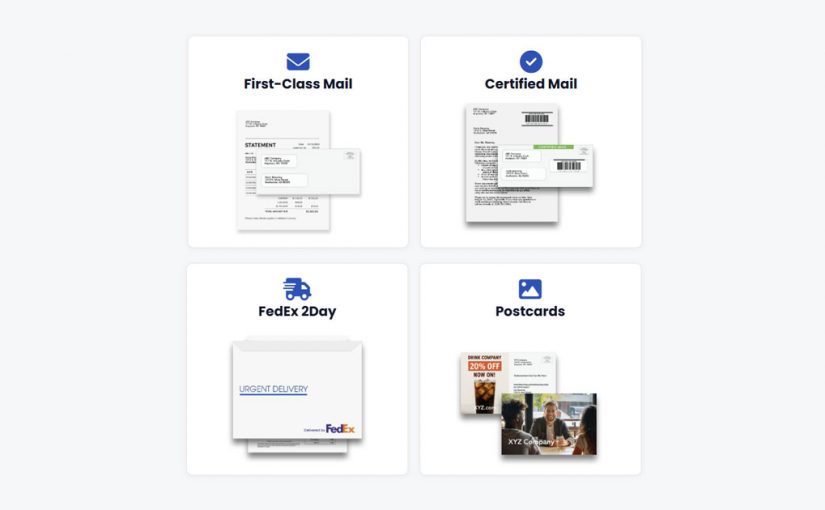
LetterStream offers bulk printing and mailing services allowing companies to send physical mail online. Whether it’s online Certified Mail, First-Class Mail, FedEx 2Day, or postcards, we give both small businesses and large corporations the time and freedom back to work on tasks that better serve the company. If you’re interested in creating a free account, you can do so here.

LetterStream small logo

5 Small But Easy Changes That Make Business Mail More Effective

After watching thousands of mailings move through the system each year, clear patterns begin to emerge—patterns about what works, what slows people down, and what captures attention. The smallest refinements often make the biggest impact. This guide highlights five practical changes businesses can make to create mail that’s easier to read, easier to understand, and more likely to get the response they’re hoping for.

Keep Envelopes Clean, Clear, and Easy to Scan

Envelopes make the first impression, and small design choices influence whether someone opens a letter right away or places it in a growing stack of “deal-with-later” mail. Simpler designs typically perform better than cluttered ones. A straightforward return address, a clearly visible window, and minimal distractions help recipients identify who the mail is from and why it matters.

Businesses that send their mail through LetterStream tend to benefit from this consistency automatically, since the system uses streamlined envelope formats that avoid visual overload. A clean layout helps the recipient recognize your organization immediately, reducing hesitation and increasing trust.

Keep Messages Short, Direct, and Organized

Letters that use clear subject lines, short paragraphs, and bolded key statements are easier for recipients to absorb. When people understand the message quickly, they act more quickly too. Dense text slows people down; concise language gives them confidence that they’ve grasped the information without having to reread it.

Choose Timing Carefully

The timing of your mail can make a surprising difference. For many businesses, early-week mailings tend to reach customers during the days they’re most likely to be sorting bills or handling administrative tasks. Likewise, certain months or billing cycles produce predictable bottlenecks that can delay responses.

Taking a few minutes to review the patterns from the past year helps you identify which windows work best. A small shift in timing can reduce delays and improve follow-through—especially for notices that require quick action.

Make the Call to Action Unmistakable

Whether you’re sending a notice, reminder, or request, your call to action shouldn’t hide in a paragraph. Recipients should know exactly what you’re asking them to do within seconds. Clear instructions—paired with simple, readable formatting—set expectations and minimize follow-up questions.

Many LetterStream users rely on standardized templates to keep these key statements front and center. When mail is prepared and sent online, it becomes easier to ensure that every letter includes the same clarity and structure.

Test Small Adjustments and Track the Results

The most effective mailers often make small changes throughout the year and evaluate how each shift affects response times or customer behavior. A tweak to wording, a revised template, or a streamlined paragraph can create measurable improvements in how recipients engage with your messages.

LetterStream makes this testing easier because everything lives in one online environment. When teams update templates or adjust formats, they can compare results over time and refine their communication without juggling multiple versions or outdated files.

Consistency Makes Mail More Effective

Over time, the organizations with the strongest results tend to be the ones that maintain consistent templates, clear wording, and intentional timing. Small adjustments—applied steadily—make business mail more predictable, more professional, and more effective.

To learn more about LetterStream or to sign up for a free account, click here.

LetterStream offers bulk printing and mailing services allowing companies to send physical mail online. Whether it’s online Certified Mail, First-Class Mail, FedEx 2Day, or postcards, we give both small businesses and large corporations that time and freedom back to work on tasks that better serve the company. If you’re interested in creating a free account, you can do so here.

LetterStream small logo

How to Easily Keep Mail Moving When the Office Is Empty

December is one of the most joyful months of the year—and one of the most unpredictable for office schedules. With employees taking well-earned PTO, hybrid work in full swing, and year-end tasks piling up, many teams discover their mail workflows slowing down just when communication matters most. The good news is that with a little planning and a flexible process, your business mail can stay on schedule even when half the team is unplugged for the holidays.

When PTO Creates Unexpected Bottlenecks

Many organizations rely on workflows that work well in September but crack in December. Maybe only one person manages approvals. Maybe one employee knows how to run the office printer. Maybe key sign-offs live on a desk instead of a shared system. When that person is out on PTO, everything waits—sometimes for days.

December exposes these weak points faster than any other month. Teams work from different cities, offices close early, and responsibilities shift temporarily. Mail still needs to go out… it just doesn’t always have someone available to move it forward.

Why December Mail Matters More Than It Seems

Even routine mail carries more weight during the holidays. HOAs are sending reminders, nonprofits are sending acknowledgments, businesses are issuing statements, and many organizations are preparing documents needed for early January. Delays in December often spill into the new year, creating a backlog no team wants to start with.

Customers and members also expect clarity during a season already filled with noise, travel, and weather disruptions. Keeping your mail moving isn’t just operational—it builds trust.

Creating a PTO-Proof Mail Workflow

A resilient December workflow doesn’t depend on one person being at their desk. It relies on processes that can move forward from anywhere. A few adjustments make a big difference:

  • Store templates in a shared, easy-to-access location
  • Standardize approval steps so coverage is clear during vacations
  • Use formats that don’t require specialized equipment
  • Communicate deadlines early so teams can avoid last-minute scrambles

The more your system supports collaboration between remote and in-office team members, the fewer slowdowns you’ll see.

How LetterStream Helps Keep Mail Moving During PTO

Many teams turn to LetterStream in December (and throughout the year, really) because it eliminates the “someone has to be in the office” problem entirely. When your mail can be prepared, reviewed, and sent online, your workflow continues even when key people are out.

Approvals happen digitally. Documents move smoothly from one step to the next. No one needs access to a printer, envelopes, postage, or special equipment. And because LetterStream handles printing and sending on your behalf, every mailing stays fast, accurate, and reliable—even if your office is half empty for the holidays.

For teams navigating rotating schedules, weather closures, and end-of-year responsibilities, this flexibility becomes essential.

Keeping Communication Steady All December Long

A little preparation ensures your mail doesn’t slow down just because your staff is taking a much-needed break. When workflows are clear and supported by the right tools, December becomes far more manageable—and your communication remains uninterrupted, consistent, and dependable.

To learn more about LetterStream or to sign up for a free account, click here.

LetterStream offers bulk printing and mailing services allowing companies to send physical mail online. Whether it’s online Certified Mail, First-Class Mail, FedEx 2Day, or postcards, we give both small businesses and large corporations that time and freedom back to work on tasks that better serve the company. If you’re interested in creating a free account, you can do so here.

LetterStream small logo

LetterStream Has a New Look! Introducing Our New, Updated Website

If you’ve visited LetterStream before, you may have noticed something different—we’ve launched a brand-new website design at LetterStream.com. This makeover has been in the works for a while, and we’re thrilled to finally share it with you!

But before we go any further, we want to make one thing clear:

LetterStream is still the same reliable, secure, accuracy-obsessed mailing partner you trust. Nothing has changed in your account, your workflows, or the technology behind the scenes.

This update is all about giving you a better, clearer, and more modern experience when you first discover us. We’re still the same, just with a better-looking website.

Why We Updated Our Website

Old LetterStream Website

Over the years, business mail has evolved—and so have we. We’ve expanded our capabilities, invested in new equipment, strengthened our technology, and continued to support individuals and organizations of all sizes with secure, high-volume, time-sensitive mailing.

But our public-facing website didn’t fully reflect who we are today.

The new site is designed to:

  • Improve the user experience for visitors exploring LetterStream for the first time
  • Clarify our solutions so potential customers can quickly understand how we help
  • Showcase our capabilities with a cleaner, more modern design
  • Align our digital presence with our identity—professional, dependable, and easy to work with

Your secure LetterStream account and all backend systems remain unchanged. Once you log in, you’ll find the same interface and the same reliable service you’re accustomed to. The only difference is that the font is a little nicer.

What’s New?

New LetterStream Website

Our updated brochure-style website features:

  • A refreshed look and feel
  • Clearer navigation for exploring services
  • Better explanations of what we do and how we help
  • A friendlier path for new customers discovering LetterStream

This facelift reflects our commitment to continuous improvement—even when the change is purely visual. We wanted our first impression to match the quality, precision, and care that happen every day inside the LetterStream platform.

What Hasn’t Changed

LetterStream Dashboard

Everything that matters to your business and your daily operations stays exactly the same:

  • Your account
  • Your mailing workflows
  • Our production standards
  • Our security and compliance
  • Our obsession with accuracy and timeliness

LetterStream is still LetterStream—just with a better “front door.”

We’re Excited for What’s Ahead

This new website is the first step in a larger effort to continually improve how we communicate, educate, and support our customers. It’s a reflection of our growth and our ongoing commitment to be the most dependable and easiest-to-use business mailing partner in the industry.

And as always, thank you for trusting us with your critical mail. We’re honored to support your business—and excited to welcome both new and longtime customers to our updated home online.

If you haven’t seen the new site yet, we’d love for you to explore it: Visit the new LetterStream experience → https://www.letterstream.com/

Our LetterStream Help doc talks more about our new website.

LetterStream offers bulk printing and mailing services allowing companies to send physical mail online. Whether it’s online Certified Mail, First-Class Mail, FedEx 2Day, or postcards, we give both small businesses and large corporations that time and freedom back to work on tasks that better serve the company. If you’re interested in creating a free account, you can do so here.
LetterStream small logo

How to Keep Business Mail Moving with Hybrid Teams

December brings its own rhythm to the workplace. Some colleagues work remotely, others take time off, and a few hold down the office while the year winds down. These shifting schedules can make business mail harder to manage, especially when approvals, signatures, or customer notices depend on people who may not be in the building. Yet with the right workflow, distributed teams can keep critical mail moving smoothly—no matter where everyone is working from.

When Schedules Shift, Mail Processes Often Slow Down

Most teams feel the December squeeze at some point: the person who approves mailings is on PTO, the individual who signs checks is out of town, or the mailroom sits in one state while managers are spread across several others. Hybrid work doesn’t create these issues, but it does shine a light on the processes that rely too heavily on someone being physically present.

The result is predictable—mail waits. And waiting during December often means missing deadlines, delaying payments, or slowing down year-end communication.

The Hidden Breakdowns in Distributed Mail Workflows

December makes small inefficiencies more visible. Proofs sit in inboxes longer. A document that needs to be printed stays stuck because only one teammate knows the process. Or someone needs to approve a notice but can’t access the tools from home.

If teams rely on in-office printers or manual handoffs, these gaps widen quickly. Hybrid work works best when every step of the workflow can move independently of where people happen to be sitting.

How LetterStream Helps Hybrid Teams Keep Mail Moving

This is where online mailing becomes a major advantage. When teams prepare and send their mail through LetterStream, they no longer depend on being in the office to keep things on schedule.

Everything—from uploading documents to reviewing proofs to approving mailings—happens online. A manager can approve a critical notice from another state. A remote employee can prepare end-of-year customer letters without needing access to a company printer. And the handoff to the carrier happens automatically once the job is submitted, keeping the workflow consistent even when staff schedules change.

Many organizations find that LetterStream reduces end-of-year bottlenecks because it eliminates the physical steps that slow teams down. Instead of mail piling up on a desk, everything moves through a simple, trackable process that works for people wherever they are.

December Workflows That Actually Work

When teams take a moment to look at how mail moves through the organization, a few straightforward updates can transform the experience. Clear digital approval steps keep projects moving. Standardized templates reduce questions. And online workflows prevent delays caused by vacation calendars or hybrid schedules.

As more companies rely on distributed teams, the ability to prepare and send mail online becomes a core part of staying efficient during the holidays.

Hybrid Work Doesn’t Have to Slow Down Your Mail

December may add complexity to the workday, but it doesn’t need to disrupt business-critical mail. With flexible systems and online tools that support distributed work, teams can collaborate smoothly, maintain their schedules, and keep every piece of mail moving without interruption.

To learn more about LetterStream or to sign up for a free account, click here.

LetterStream offers bulk printing and mailing services allowing companies to send physical mail online. Whether it’s online Certified Mail, First-Class Mail, FedEx 2Day, or postcards, we give both small businesses and large corporations that time and freedom back to work on tasks that better serve the company. If you’re interested in creating a free account, you can do so here.
LetterStream small logo

How to Review Your Mailroom This December

December is the perfect moment to take a breath, look around your mailroom, and decide what you want to improve before next year’s busy season arrives. Many teams rush through year-end mailings without realizing how much smoother things could run with a quick audit. This guide walks through seven practical areas worth reviewing so your mail operations stay fast, accurate, and reliable in the year ahead.

Start With Your Address List

Before anything else, take inventory of your mailing data. Address lists tend to accumulate small errors over time, and those errors can lead to unnecessary returns or delays during heavy mailing months. December is a natural moment to check for duplicates, outdated entries, missing apartment numbers, and old addresses that need updating. A cleaner list means fewer surprises—and fewer stacks of returned envelopes waiting for attention in January.

Teams that send mail online through LetterStream often notice data issues earlier because the system makes inconsistencies easier to spot. A quick cleanup now can save hours of sorting and re-mailing next year.

Review Your Templates and Letter Formats

Your letter templates may be working, but are they still accurate, branded, and easy to read? Policies change, contact information gets updated, and branding evolves quietly in the background. Reviewing your templates now ensures that everything you send next year reflects the clear and professional tone your customers expect.

Clear subject lines, scannable text, and straightforward messaging also help recipients understand your letter the moment they open the envelope, reducing confusion and follow-up questions.

Clarify What Mail Is Truly Business-Critical

Not all mail carries the same weight. Some notices are time-sensitive and regulatory; others are informational or seasonal. December is a useful time to categorize what absolutely must be sent on a schedule and what can be adjusted, postponed, or moved online. Understanding these categories helps you allocate your team’s effort during peak periods and prevents everyone from scrambling at the same time.

Evaluate Internal Workflows and Bottlenecks

Most bottlenecks hide in plain sight. It may be a single person who handles approvals, a printer that only one or two team members can troubleshoot, or a handoff process that depends on everyone being physically in the office. These small friction points slow things down more than most teams realize.

Online mailing tools—like The Stream from LetterStream—can reveal these slow spots because they consolidate steps that normally involve multiple stages or people. When everything moves through one system, delays become easier to see and resolve.

Review Timing Patterns Throughout the Year

Think about when your mailroom felt busiest. Were certain months or billing cycles especially overwhelming? Did deadlines stack up at the same time every quarter? Understanding these patterns helps you shift preparation earlier, schedule support during peak weeks, or streamline certain notices before the pressure hits again.

Even small changes to timing can make your next busy season feel much more manageable.

Check That Your Records and Logs Are Up to Date

If your team logs returned mail, tracks outgoing volumes, or collects proof-of-mailing documents, December is an ideal time to confirm everything is current and accurate. Inconsistent documentation creates confusion later—especially when you need to reference a specific mailing or timeline.

When records are organized and current, you gain clearer insight into what’s working and what needs improvement next year.

Consider Whether It’s Time to Outsource Your Mailings

A year-end audit often raises an important question: Should we keep managing all of this in-house?

If your team spends valuable time printing, stuffing envelopes, fixing jams, or waiting on approvals, outsourcing some or all of your mail may free up significant hours.

Many organizations turn to LetterStream when they realize how much smoother operations become when they can print and send their mail online instead of relying on manual, on-premise processes. Outsourcing doesn’t replace your mailroom—it supports it by removing the repetitive, time-consuming steps so your team can focus on higher-value work.

A Strong Start Begins With a Thoughtful December

A quick year-end review can help your team catch small issues before they become bigger ones. By cleaning up data, refining templates, spotting bottlenecks, and deciding what truly needs to stay in-house, you set the stage for smoother, more efficient mail operations in the year ahead.

To learn more about LetterStream or to sign up for a free account, click here.

LetterStream offers bulk printing and mailing services allowing companies to send physical mail online. Whether it’s online Certified Mail, First-Class Mail, FedEx 2Day, or postcards, we give both small businesses and large corporations that time and freedom back to work on tasks that better serve the company. If you’re interested in creating a free account, you can do so here.
LetterStream small logo

Mail Delays in Winter and How to Handle Them

Winter weather can slow down mail, but it doesn’t need to slow down communication. When snow and storms hit, the most important thing customers want to know is simple: What’s happening, and what should we expect? This guide explains what parts of the mailing process businesses truly control during winter delays—and how clarity helps prevent confusion and frustration.

What Winter Weather Impacts—and What It Doesn’t

During severe weather, there’s a clear line between the steps a business controls and the steps that fall to the carriers. Understanding that line makes it easier to communicate realistic timelines.

What Businesses Can Control

Even during winter storms, several parts of the workflow stay fully within your control. You decide when mail is prepared, how accurate it is, and when it’s handed off to the carrier. Print quality stays consistent regardless of the forecast, and you can give customers tracking information so they always know where their mail is in the process.

Many organizations rely on LetterStream’s online mailing tools to keep these steps steady. Because everything is created and managed digitally, businesses can continue sending mail online quickly, accurately, and reliably—even when the weather outside is unpredictable.

What Businesses Cannot Control

Once the carrier has the mail piece, winter weather can affect travel routes, staffing, and regional processing times. Storms may slow local transportation, ground flights, or create bottlenecks at certain facilities. These delays are outside your hands, but how you explain them to your customers is not.

How to Set Clear Expectations With Customers During Storms

Transparent communication is one of the most effective tools during winter weather. Customers want to know what’s happening and appreciate early, honest updates.

A simple email message often works best:
“Your letter was sent on ____. Because of regional winter weather, it may take a little extra time to move through the carrier’s system. You can follow its progress using the tracking link provided.”


This type of wording acknowledges the situation without sounding alarmed or placing blame.

For time-sensitive documents—such as invoices, tax forms, or year-end notices—it can help to send them a little earlier than usual. Many businesses also find it useful to review approaching weather patterns or local carrier advisories so they can anticipate possible slowdowns.

Helping Customers Stay Informed Without Overexplaining

Most customers don’t need a deep dive into postal operations; they simply want to know that their mail is on its way and that someone is paying attention. Clear, calm updates go a long way. Pointing customers to tracking information reduces guesswork and gives them confidence that the process is still moving, even if slowly.

This is also where a consistent workflow matters. When businesses use tools like LetterStream to print and send their mail online, they know that everything was prepared correctly and handed off promptly. That consistency provides a reliable foundation for customer communication, even when the weather adds some unpredictability.

Clarity Builds Trust in Winter

Winter weather is unavoidable, but confusion doesn’t have to be. When businesses understand what they control—and communicate honestly about what they don’t—customers stay informed and confident, even during unpredictable weather events.

To learn more about LetterStream or to sign up for a free account, click here.

LetterStream offers bulk printing and mailing services allowing companies to send physical mail online. Whether it’s online Certified Mail, First-Class Mail, FedEx 2Day, or postcards, we give both small businesses and large corporations that time and freedom back to work on tasks that better serve the company. If you’re interested in creating a free account, you can do so here.
LetterStream small logo

Thankful for the People Behind Every Piece of Mail

Thanksgiving has a way of slowing us down. Even in a world built on speed, automation, and digital-to-physical communication, this day invites us to pause and appreciate the people behind the work — the people who trust us, rely on us, and show up for us.

For a company like LetterStream, where thousands of organizations depend on us to send critical mail online safely and accurately, Thanksgiving means more than a holiday. It’s a reminder of why we do what we do: to serve people — real people — with care, consistency, and gratitude.

So today, instead of talking about technology or systems or production workflows, we want to talk about you — our customers, our partners, and our team.

To Our Customers: You’re the Heart of What We Do

Whether you’ve used LetterStream for years or you just discovered our print and mail service this quarter, we are grateful for the trust you’ve placed in us.

Many of you handle high-stakes communication — legal notices, HOA statements, healthcare letters, financial updates, compliance mail, and everything in between. These aren’t just “mailings.” They’re commitments. They represent promises between you and your residents, your clients, your communities, and your stakeholders.

And each time you choose LetterStream to send mail online on your behalf, you’re trusting us with those commitments. We don’t take that lightly.

This year, we’ve seen businesses across dozens of industries adapt, scale, and find new ways to operate. You’ve navigated changes in cost structures, regulations, delivery expectations, technology, and customer needs — all while staying focused on serving others. We’re thankful to be part of that mission and honored to support it.

Whether you mailed 50 pieces or 50,000 pieces this year, you’ve helped us grow, improve, and innovate. And we’re thankful for the conversations, feedback, and stories you’ve shared about how our platform helps your business run smoother.

You make our work meaningful.

To the Teams Behind the Mailrooms, Desktops, and Dashboards

LetterStream works with incredible professionals — managers, operations leads, paralegals, billing teams, administrators, customer support staff, compliance officers, coordinators, and entire departments who keep communication moving.

You are the ones who:

  • Upload files at 10 p.m. because a deadline can’t wait
  • Choose Certified Mail online for accountability
  • Track delivery statuses for important recipients
  • Update addresses
  • Plan mail drops
  • Keep things running when systems change, when markets shift, or when volumes spike

You’re the unseen heroes in many organizations. The ones who protect timelines, ensure accuracy, and make sure the right information lands in the right hands.

We see the work you do, and today, we’re especially thankful for it.

To Our LetterStream Team: None of This Happens Without You

Technology matters. Systems matter. Automation matters. But people are what make LetterStream, LetterStream.

To our production crew — thank you for handling the physical side of business-critical communication with incredible precision. Every envelope sealed, every tray sorted, every shift covered… those seemingly small actions are what make our operation dependable.

To our customer support and account teams — thank you for being thoughtful, patient, and helpful. We hear from customers all the time about how much they appreciate working with real humans who genuinely care.

To our developers and technology teams — thank you for building dependable tools that allow customers to send mail online with confidence. The dashboards, visibility, and automation you create make life easier for thousands of people every day.

To our leadership, operations, marketing, and everyone who makes this place work — thank you for championing accuracy, consistency, and service. LetterStream exists because you do.

This Year, We Are Especially Grateful for…

Reliability.
Every time a customer uploads a file, selects a mail class, and trusts us to handle it — that’s a privilege. Thank you for giving us the opportunity to serve.

Resilience.
So many of our customers are navigating rising costs, shifting expectations, and changing communication habits. Yet you stay committed to accuracy and professionalism, and we’re honored to support you.

Relationships.
The emails, feedback, and shared ideas — they help us get better. We appreciate every conversation.

Impact.
Whether it’s a compliance notice, a billing statement, a legal communication, a postcard, or a simple reminder, your mailpieces matter more than you know. They help communities function, help organizations stay in rhythm, and help people stay informed.

Thank you for allowing us to play a part in that impact.

A Thanksgiving Message as We Head Toward 2026

As business mail evolves — with shifting costs, hybrid communication, and automation shaping the future — our commitment stays the same: to be the most reliable, secure, and user-friendly print and mail service available.

But more importantly, we remain committed to the people behind the mail.
The people who trust us.
The people who work alongside us.
The people who keep businesses and communities connected.

On this Thanksgiving Day, we want you to know one thing:

We are grateful for you — today and every day.

Enjoy this time with family, friends, and the people who make your world brighter. We’ll be here when you need us again — ready to help you send business-critical mail with confidence, accuracy, and ease.

LetterStream offers bulk printing and mailing services allowing companies to send physical mail online. Whether it’s online Certified Mail, First-Class Mail, FedEx 2Day, or postcards, we give both small businesses and large corporations that time and freedom back to work on tasks that better serve the company. If you’re interested in creating a free account, you can do so, here.

LetterStream small logo

The History of the Post Office

In a world where mail can be sent with a click, it’s easy to forget that the story of the United States Postal Service began nearly 400 years ago — inside a Boston tavern.

Before there were mail trucks, sorting centers, or tracking dashboards, there was a tavern in Boston — and a man named Richard Fairbanks. In 1639, Fairbanks’ Tavern became the first official drop-off and collection point for mail in the American colonies. For a small fee, he would receive letters from ships and forward them to their destinations.

That simple act of connection, moving messages between people and places, laid the foundation for what would become one of the most important networks in the world: the United States Postal Service (USPS). And today, companies like LetterStream continue that legacy in a modern way, using digital tools and print and mail automation to connect businesses and customers across the country.

The Colonial Roots of America’s Postal System

By 1672, an organized mail route existed between New York City and Boston. But communication across the colonies was slow and unreliable until 1775, when the Second Continental Congress created an official postal system and appointed Benjamin Franklin as the first Postmaster General.

Franklin’s innovations — standardized routes, regular schedules, and fair pricing — made mail a national priority. When the U.S. Constitution was adopted in 1787, Article I, Section 8, Clause 7 gave Congress the authority “to establish Post Offices and post Roads.” That single clause transformed communication into an infrastructure priority for a young nation.

The early postal network became the circulatory system of America, connecting cities, frontier towns, and government offices through handwritten letters carried by horseback and stagecoach.

Nation-Building: The Postal Service Act of 1792

In 1792, Congress passed the Postal Service Act, officially creating the U.S. Post Office Department. At the time, there were only 76 Post Offices and roughly 2,400 miles of post roads. Within two decades, that number exploded — more than 50,000 miles of routes carried letters to every corner of the growing country.

The early mission was simple: make mail accessible and affordable to everyone. That promise of universal service still defines the postal system — and it’s the same principle guiding modern printing and mailing partners like LetterStream, which helps organizations reach recipients anywhere through a fully online process.

The 1800s: Innovation, Expansion, and Reform

As the United States grew, so did its appetite for communication. In 1845, Congress reduced postage rates, making mail cheaper for ordinary citizens. Within a few years, letter volume doubled.

In remote areas, “Star Routes” — private contractors hired by the Post Office Department — carried mail to towns that government routes couldn’t reach. While the system faced corruption scandals in the 1870s, it also paved the way for nationwide access and efficiency reforms.

Then in 1872, the Post Office Department became a cabinet-level agency. It wasn’t just a service — it was a pillar of American infrastructure, helping to unify a rapidly industrializing nation.

The 20th Century: Airplanes, ZIP Codes, and Modernization

The 1900s brought extraordinary change. Rural Free Delivery (RFD) gave isolated communities daily access to mail. In 1925, the Air Mail Act opened the skies to private companies, laying the groundwork for the commercial aviation industry.

World War II introduced “V-Mail” — microfilmed letters that could be transported quickly and reprinted overseas — a precursor to today’s digital document transmission. By 1963, the invention of ZIP Codes modernized delivery, speeding up sorting and routing nationwide.

Each leap reflected a pattern: when technology changed, the postal system evolved with it. The same principle drives today’s innovations in mail automation, where companies like LetterStream integrate online ordering, real-time tracking, and cloud-based production to make business mail smarter and faster.

The Postal Reorganization Act and the Birth of USPS

By the late 1960s, the old Post Office Department was under pressure. Worker strikes and budget shortfalls demanded reform. The Postal Reorganization Act of 1970 transformed the system into the United States Postal Service — an independent agency designed to run with both business discipline and public service values.

When the USPS began operations in 1971, it set a model for reliability, accountability, and nationwide coverage that continues to shape how mail moves today. Modern send mail online platforms like LetterStream extend that same reliability into the digital age, merging the convenience of automation with the trust of physical delivery.

The Mailroom Revolution: From Post Roads to Print-and-Mail Online

The postal network that began with Franklin’s routes has now evolved into digital ecosystems. In 2025, businesses send and track letters not from behind mailroom counters but from online dashboards.

Mail automation platforms can print, insert, seal, and deliver letters with a few clicks — no stamps, no queues, no manual sorting.

Through LetterStream’s print and mail service, companies can upload files, choose mail classes such as Certified Mail online or First-Class Mail, and click send, without doing anything else.

It’s the same mission that began nearly 250 years ago — connecting people reliably — now powered by digital intelligence.

Looking Ahead: Legacy Meets Innovation

The story of America’s postal system isn’t just about history; it’s about evolution. From tavern counters to mail trucks to automated dashboards, the same commitment runs through it all: ensuring information moves securely, efficiently, and accessibly.

LetterStream continues that legacy by combining the reliability of USPS infrastructure with the precision of modern technology. When you print and mail online through LetterStream, you’re not just sending a letter — you’re taking part in a centuries-old promise of connection and trust.

To learn more about LetterStream, click here.

References

  1. Smithsonian National Postal MuseumThe Colonial Posts
    https://postalmuseum.si.edu
  2. Encyclopedia BritannicaPostal System of the United States
    https://www.britannica.com/topic/postal-system/United-States
  3. U.S. Postal Service (USPS)Postal History and Historical Facts
    https://about.usps.com/who-we-are/postal-history/welcome.htm
  4. National Archives FoundationThe U.S. Constitution: Postal Clause (Article I, Section 8, Clause 7)
    https://www.archives.gov
  5. National Archives Blog – The Unwritten RecordThe Postal Service Act of 1792 and Early American Communication
    https://unwritten-record.blogs.archives.gov
  6. U.S. Postal ServiceA Short History of the United States Postal Service
    https://about.usps.com/publications/pub100.pdf

LetterStream offers bulk printing and mailing services allowing companies to send physical mail online. Whether it’s online Certified Mail, First-Class Mail, FedEx 2Day, or postcards, we give both small businesses and large corporations that time and freedom back to work on tasks that better serve the company. If you’re interested in creating a free account, you can do so here.
LetterStream small logo

How to Notify Customers of a HIPAA Breach

If your company has a HIPAA Breach, you might be wondering, is it best to notify your clients through Certified Mail or First-Class Mail? The answer is Certified Mail, but there’s more to it.

When a HIPAA breach happens, every moment matters. The U.S. Department of Health and Human Services (HHS) requires covered entities and business associates to notify affected individuals “without unreasonable delay” — and no later than 60 days after discovery. But as every healthcare administrator knows, compliance isn’t just about timing; it’s also about how you send those notices.

So when protected health information (PHI) is exposed and you need to send hundreds or even thousands of notifications, one big question arises: should you send them via Certified Mail or First-Class Mail? The answer depends on your organization’s need for proof, accountability, and documentation — and how you use automation to streamline the process.

Understanding HIPAA Breach Notification Requirements

Under HIPAA’s Breach Notification Rule, affected individuals must receive written notice explaining what happened, what data was compromised, and how they can protect themselves.

But HIPAA doesn’t specify much about how those notices should be mailed — only that they must be sent by “First-Class Mail to the individual’s last known address,” unless the person has opted for electronic delivery.

That flexibility leaves compliance teams with an important decision: stick with First-Class Mail, which meets the regulatory requirement, or opt for Certified Mail, which provides proof that each letter was sent and reached its destination.

When First-Class Mail Makes Sense

First-Class Mail is the USPS standard for correspondence, statements, and compliance letters. It’s fast, cost-effective, and reliable — typically arriving within two to five business days (sometimes longer).

For smaller breaches (fewer than 500 individuals) or notifications where a simple record of mailing is enough, First-Class Mail is often the right choice. It checks the regulatory box and keeps costs manageable.

Best for:

  • Small breaches or routine notifications
  • Instances where proof of mailing (not proof of receipt) is sufficient
  • Projects that prioritize speed and cost efficiency

With LetterStream’s print and mail service, healthcare organizations can send thousands of First-Class letters securely, accurately, and quickly — all while keeping PHI protected within a HIPAA-compliant environment.

When Certified Mail Is the Smarter Choice

Certified Mail adds an extra layer of protection and documentation. Each piece is assigned a unique tracking number, providing confirmation when it’s delivered (or when a delivery attempt is made). You can even request an Electronic Return Receipt for signed proof of receipt.

For large-scale breaches or when legal exposure is high, Certified Mail is often worth the additional investment. It gives compliance teams something priceless: a verifiable trail showing each person was notified.

Best for:

  • Breaches involving hundreds or thousands of individuals
  • Situations where proof of receipt is critical
  • Times when regulators or legal counsel require detailed documentation

LetterStream’s Certified Mail online service removes all the manual work associated with green cards, Post Office lines, and physical filing. Each letter is tracked automatically, and your dashboard stores digital proof of mailing, delivery, and an Electronic Return Receipt if you requested it— ready for audits or compliance reviews.

Compliance Is About Proof, Not Just Postage

The real difference between Certified and First-Class Mail comes down to documentation. First-Class Mail means you know you sent the letter. Certified Mail confirms that you sent it and it was delivered.

In a compliance audit, that distinction can make or break your case. Regulators will expect evidence that every affected individual was notified — and if you can’t produce it quickly, it can lead to costly fines or extended investigations.

When in Doubt, Choose Certified Mail

In healthcare compliance or any industry where HIPAA is a factor, uncertainty costs far more than postage. If there’s even a small question about whether a patient received their breach notification, the safest path is Certified Mail.

That’s why many compliance officers and legal teams recommend using Certified Mail online for all breach notifications involving PHI. It’s not just about checking the HIPAA box; it’s about showing diligence, transparency, and commitment to patient trust.

The Takeaway

First-Class Mail fulfills the basic HIPAA mailing requirement. Certified Mail fulfills the need for proof and accountability. Both serve a purpose, but when the stakes are high, Certified Mail online gives you the security and evidence you need to satisfy regulators and protect your organization.

With LetterStream’s print and mail service, you can automate breach notifications, eliminate manual work, and prove compliance with confidence. Whether you’re sending 10 letters or 10,000, you’ll know your mail is documented, traceable, and secure.

To learn more about LetterStream, click here.

References

  1. U.S. Department of Health & Human Services (HHS) – Breach Notification Rule (45 CFR §§ 164.400–414)
    https://www.hhs.gov/hipaa/for-professionals/breach-notification/index.html
  2. U.S. Department of Health & Human Services (HHS) – Summary of the HIPAA Privacy Rule
    https://www.hhs.gov/hipaa/for-professionals/privacy/laws-regulations/index.html
  3. U.S. Postal Service (USPS) – Certified Mail Overview & FAQ
    https://www.usps.com/ship/certified-mail.htm
  4. U.S. Postal Service (USPS) – First-Class Mail Service Standards
    https://www.usps.com/ship/first-class-mail.htm
  5. Federal Register – Breach Notification for Unsecured Protected Health Information; Interim Final Rule
    https://www.federalregister.gov/documents/2009/08/24/E9-20169/breach-notification-for-unsecured-protected-health-information

LetterStream offers bulk printing and mailing services allowing companies to send physical mail online. Whether it’s online Certified Mail, First-Class Mail, FedEx 2Day, or postcards, we give both small businesses and large corporations that time and freedom back to work on tasks that better serve the company. If you’re interested in creating a free account, you can do so here.

LetterStream small logo